
10 Craziest GTA 6 Challenges to Try | DailyFind
Try ten self-imposed GTA 6 challenges, from no-GPS road trips to zero-collision runs. Clear rules, official screenshots and community video searches.
Published · Updated
Discover ten extraordinary European concept cars, from sculptural 1950s Alfa Romeos to fabric-covered and shape-changing experiments. Explore what makes each design unusual and which ideas remain experimental.
Fabric bodies, giant fins, lifting canopies and a car that changes length. Meet the designs that dared to ask: what if?
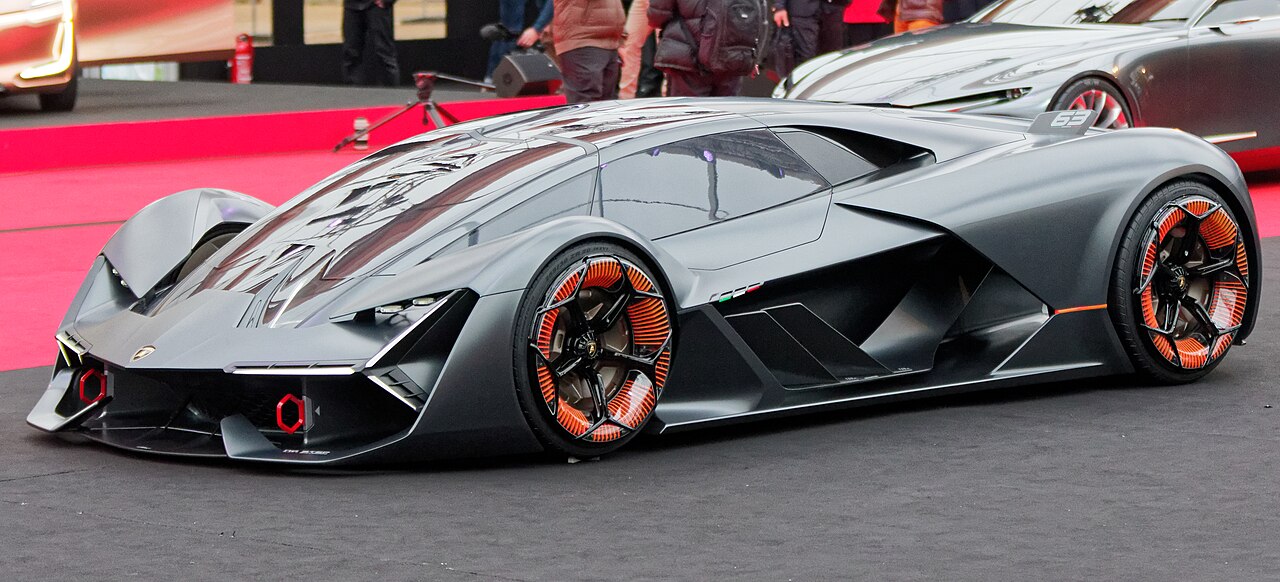
Concept cars give designers room to explore beyond the familiar. Some test materials or aerodynamics; others imagine a completely different way to travel. These ten examples, from 1953 to 2022, are a visual journey through that freedom.
This is an editorial gallery of design studies and prototypes, not a buying guide or a list of upcoming releases. Experimental technologies and manufacturer visions are identified as such. Years refer to the concepts’ introductions, not the dates of the photographs.
The wedge that made a windscreen a doorway
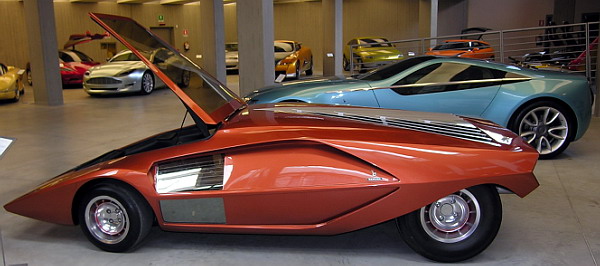
Before futuristic cars had glowing screens, they had audacious silhouettes. Designed by Marcello Gandini for Bertone and shown at the 1970 Turin Motor Show, the Stratos Zero looks like a bronze arrow resting on four wheels. Lancia records its height as just 85 centimetres.
The raised windscreen in the photograph reveals the unconventional way into the cabin. The almost horizontal seating and sharply tapered nose make it feel closer to a sculpture than an everyday car. Its Turin debut gives this international shortlist a particularly satisfying local connection.
Explore the official story ↗Aerodynamics with theatrical fins
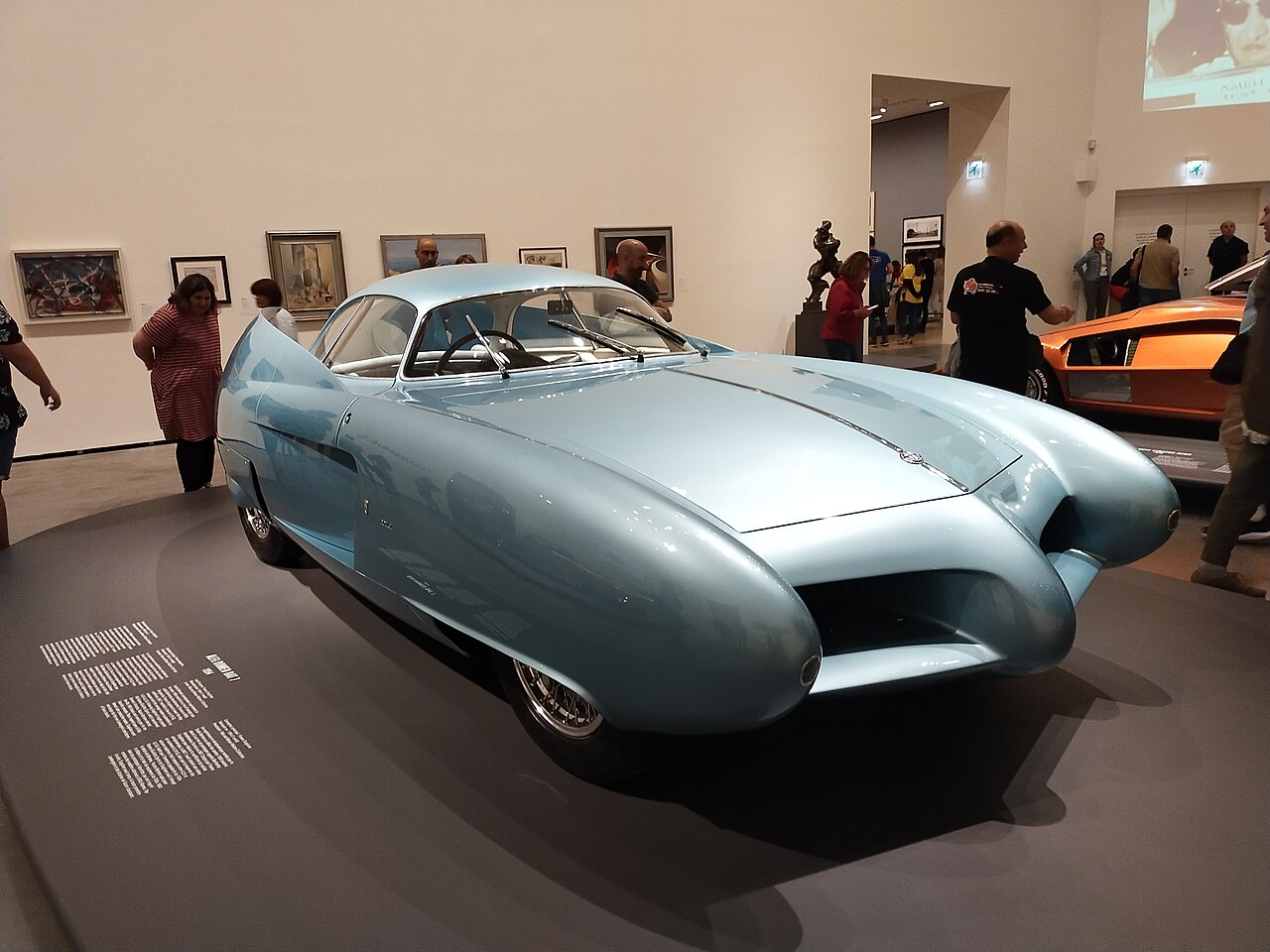
The B.A.T. 5, 7 and 9d were three separate experiments, revealed in successive years at the Turin Auto Salon. Franco Scaglione’s designs for Bertone explored how a body could move through the air, turning aerodynamic questions into memorable shapes.
The photographed B.A.T. 7 is the 1954 member of the trio. Its flowing surfaces and dramatic rear fins make the body seem almost fluid. These cars are a reminder that the future once looked wonderfully organic, long before the sharp-edged wedge became fashionable.
Explore the official story ↗A pyramid with the driver at its centre
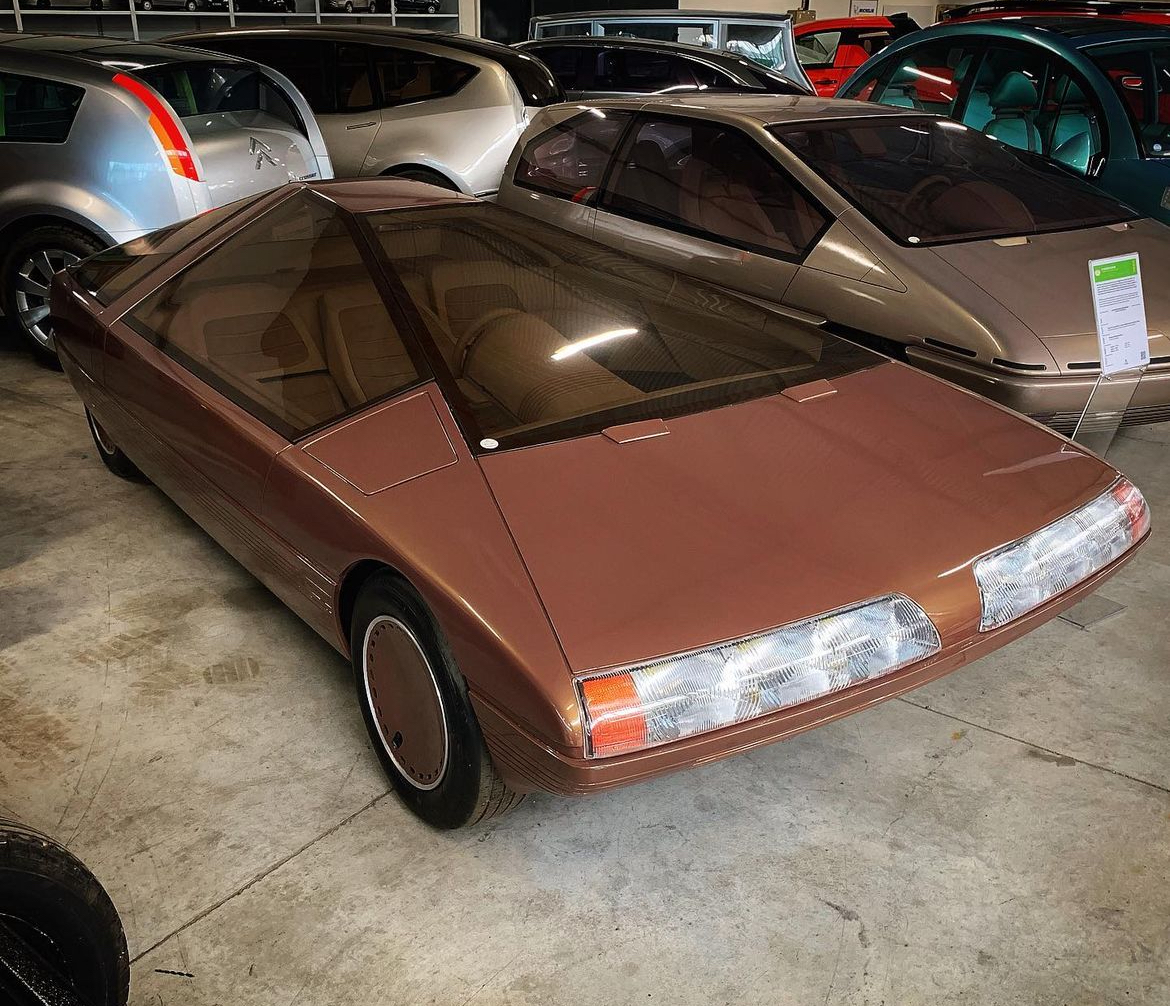
Trevor Fiore’s Karin turns a simple geometric idea into a very unusual car. Revealed at the 1980 Paris Motor Show, its broad base and tiny-looking roof create a striking pyramidal profile.
The cabin is just as unconventional: the driver sits centrally, slightly ahead of two passengers. Citroën’s heritage material describes controls gathered close to the steering wheel and an on-board information display. Instead of adding more visual drama, Karin gets its effect from reducing the shape to a few bold planes.
Explore the official story ↗The car that wears a fabric skin
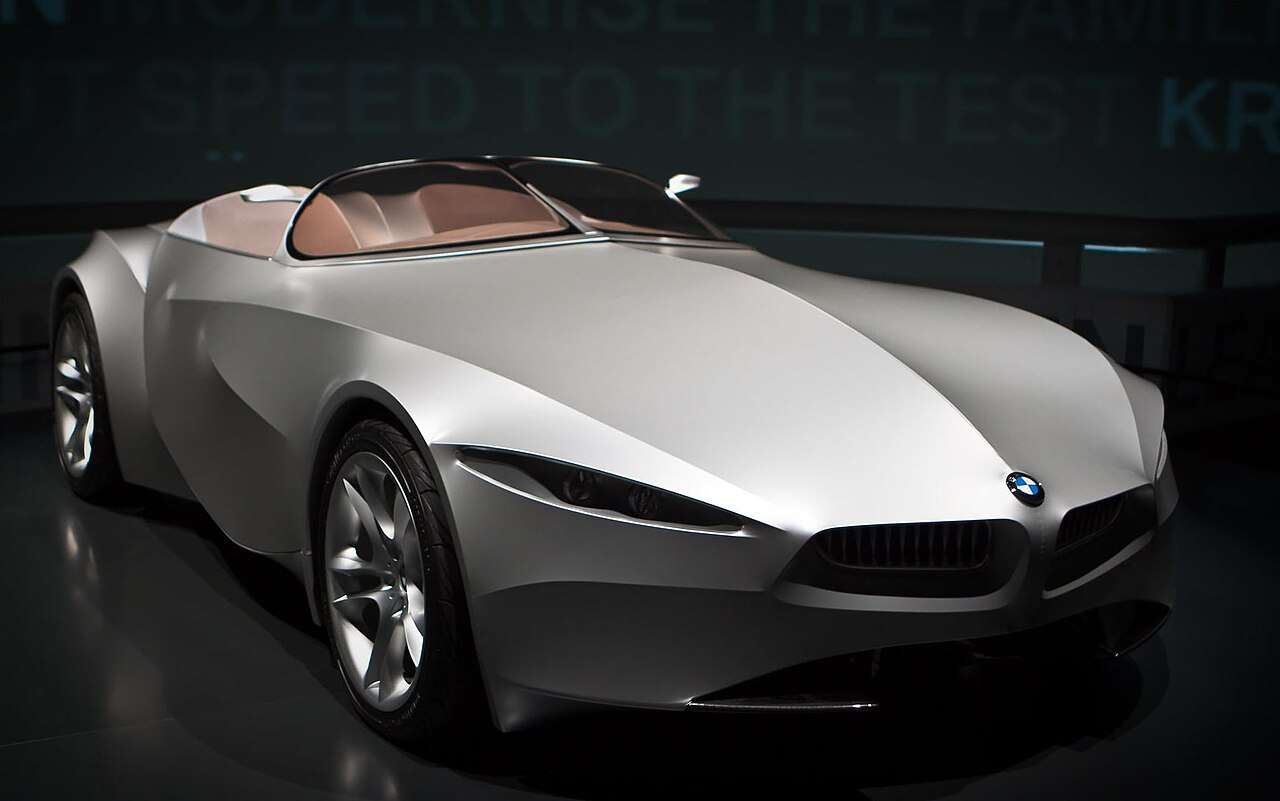
GINA asks a wonderfully strange question: why must a car’s outer skin be rigid? BMW’s research model stretched flexible textile over a movable structure, allowing the surface to change with the components beneath it.
The result feels more like a living object than conventional bodywork. Openings and forms become part of the movement, rather than fixed panel gaps. It is best understood as a design investigation into adaptable materials and functions—not a promise that your next car will need a tailor.
Explore the official story ↗A private lounge imagining the driverless age
Rolls-Royce’s 103EX imagines luxury travel built around the passenger. The long, sculptural exterior wraps around a lounge-like interior, with the familiar job of driving removed from the centre of the experience.
Its autonomous journey is a manufacturer’s future vision, not evidence that a road-ready driverless Rolls-Royce was available to buy. That distinction makes the design more interesting: it explores what a cabin could become when the whole space is devoted to arrival, comfort and personal surroundings.
Explore official story & gallery ↗Explore the manufacturer’s photographs in the linked official gallery.
An electric supercar with radical material ambitions
Terzo Millennio looks ready for a science-fiction chase, but the research questions are as striking as the body. Lamborghini’s project with MIT explored energy storage, advanced composites and an electric architecture designed around supercar performance.
Supercapacitors and energy-storing body materials belong to that research agenda. So do proposals for detecting and addressing small fractures in carbon structures. The self-healing idea is an experimental ambition, not a demonstrated everyday repair feature. Lamborghini explicitly identifies the vehicle as a concept, unavailable as a production model.
Explore the official story ↗Further reading: Lamborghini explains the materials research and self-repair ambition.
A grand tourer you enter through the roof
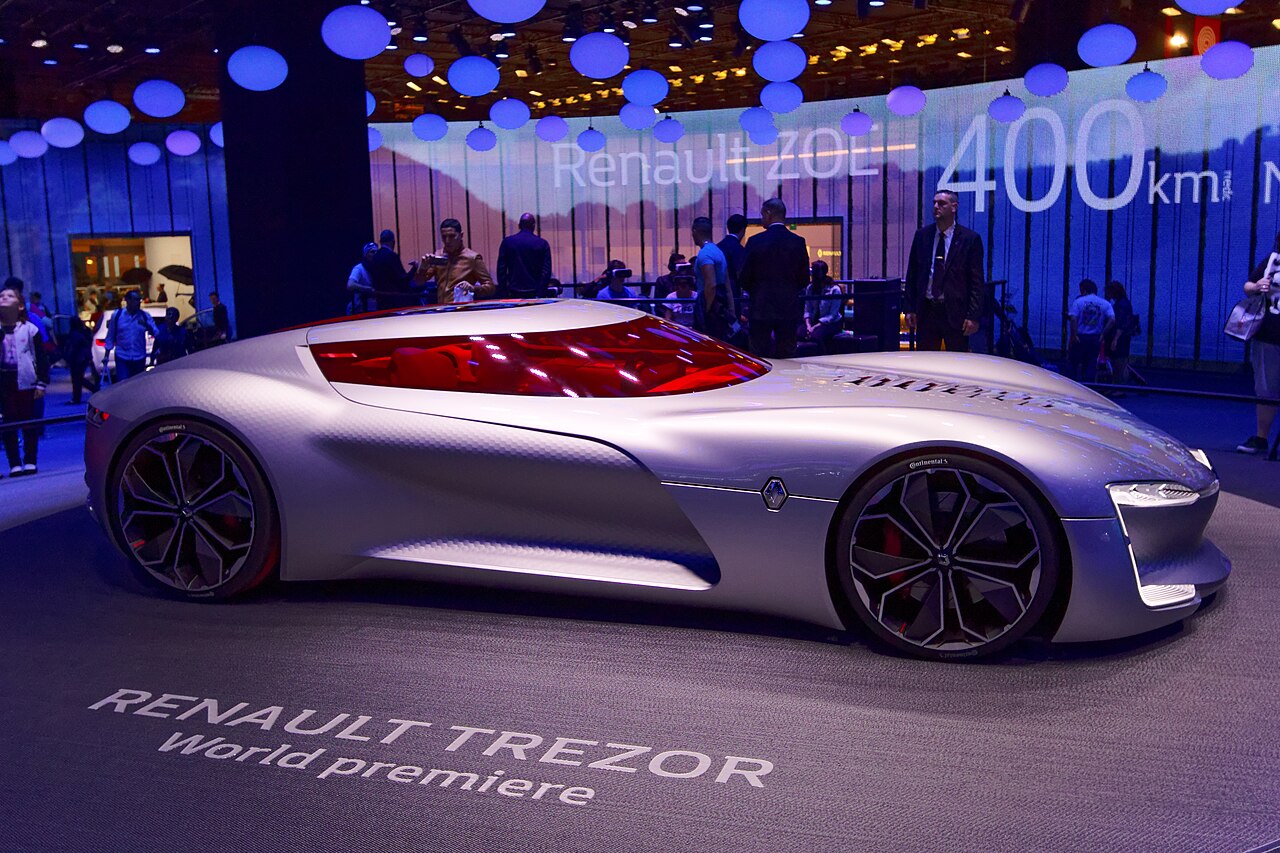
TREZOR combines a long, low electric coupé with a particularly theatrical entrance. Its lifting upper section replaces the usual door-opening routine with something closer to entering a cockpit.
The silver surfaces and red glazing make the contrast between exterior and cabin part of the spectacle. Renault presented it as a two-seat electric GT and a new stage in its design thinking. The lesson is not that every car needs a canopy; it is that even getting into a vehicle can become the defining design moment.
Explore the official story ↗A car that borrows its gestures from living things
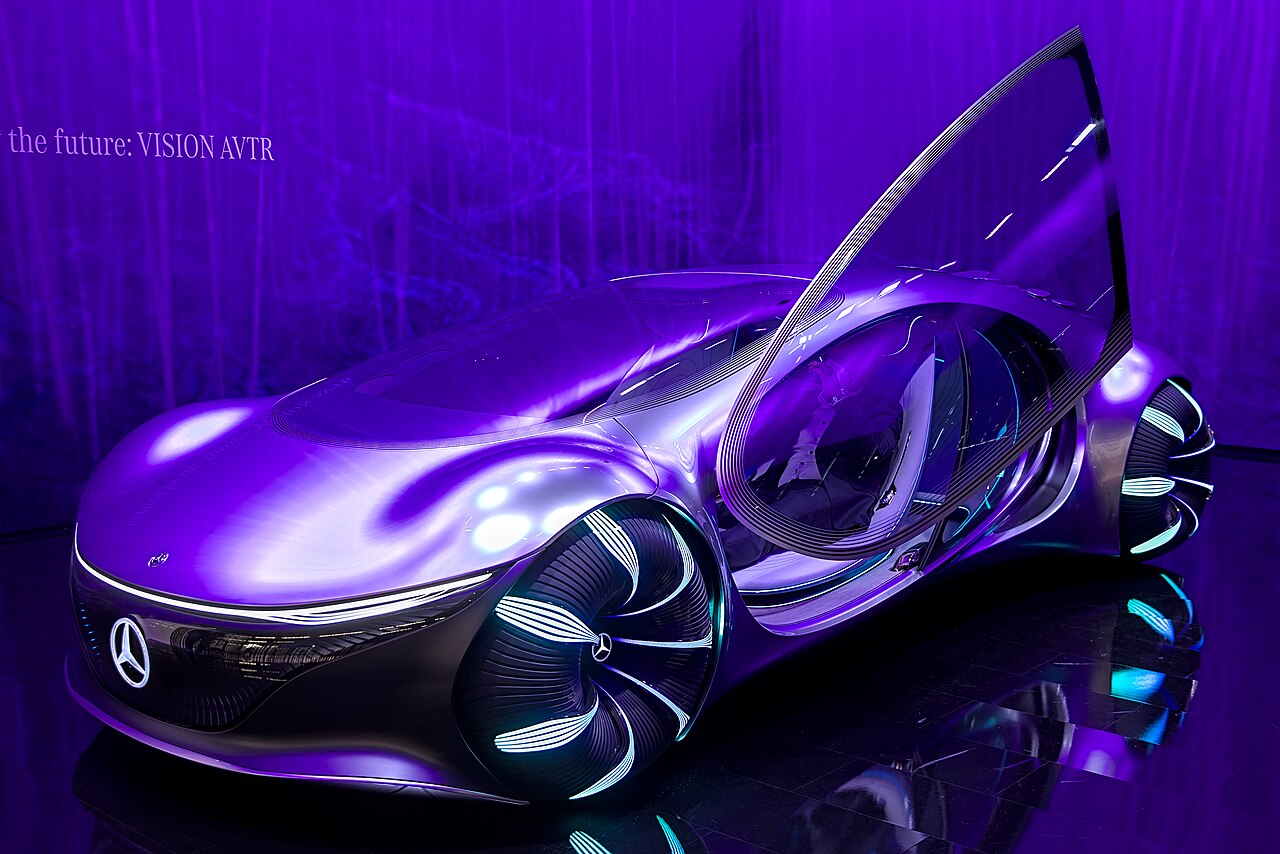
Inspired by Avatar, VISION AVTR makes the connection between person, machine and environment the main attraction. Its illuminated surfaces and organic cabin move the visual language away from familiar dashboard-and-bonnet conventions.
Mercedes-Benz describes 33 movable rear “bionic flaps” and a multifunctional control element as part of the concept. Think of it as a speculative interface and design experiment. Its futuristic battery and mobility ideas should not be read as specifications for a showroom car.
Explore the official story ↗One roadster, two lengths
Changing the driving mode normally changes settings. Skysphere takes the idea further by changing the car’s proportions. Audi describes a mechanism that varies the wheelbase and overall length by 250 millimetres.
The shorter configuration is imagined around an active sports-car experience; the longer one explores relaxed grand touring and a more spacious interior. It is a compelling physical expression of two personalities, while remaining a concept rather than an available production vehicle.
Explore official story & gallery ↗Explore the manufacturer’s photographs in the linked official gallery.
The future, with less excess
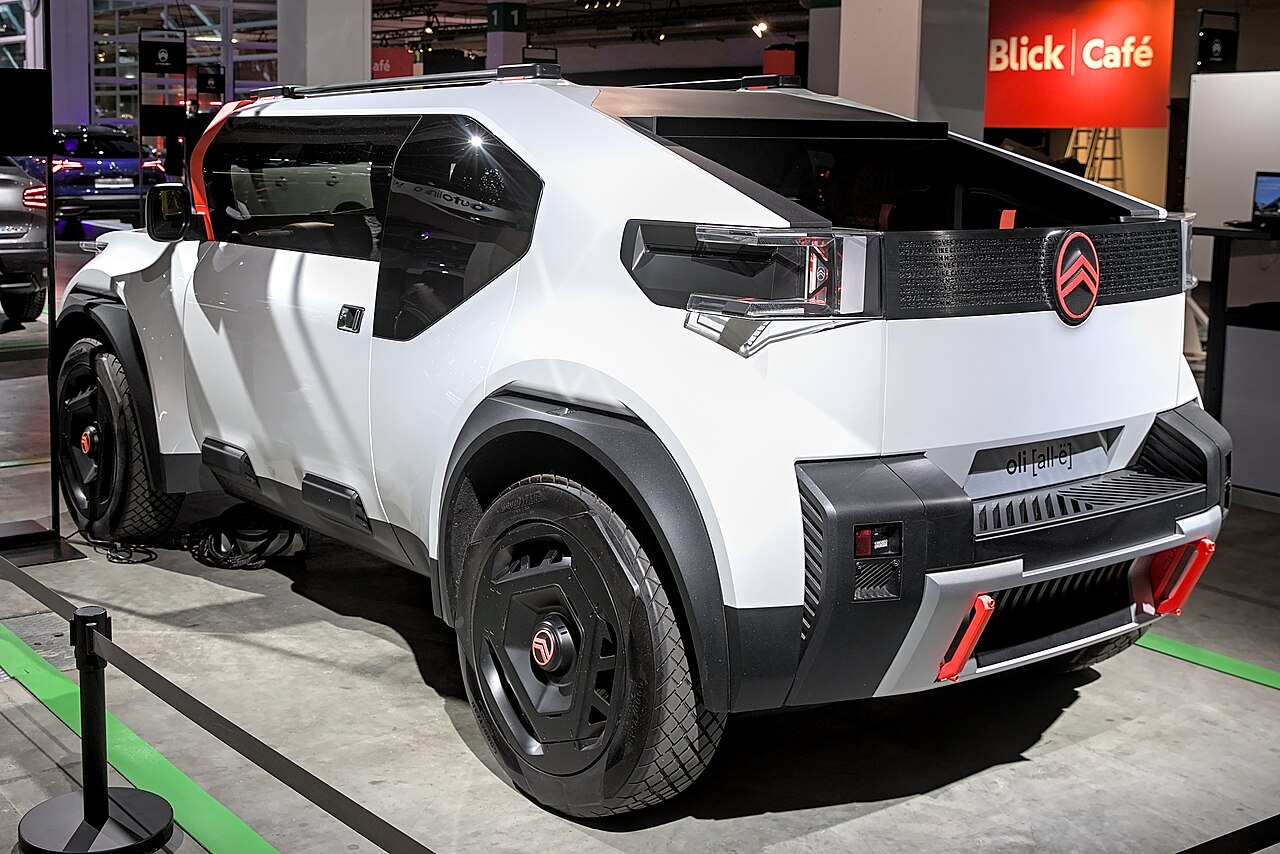
Oli is the deliberate change of pace in this gallery. Its upright, boxy design explores a lighter and simpler approach to electric family mobility, rather than chasing another extravagant luxury cabin.
Citroën’s proposal emphasises resource use, reuse and practical design. The interesting question is how much a car can leave out while remaining useful. Treat the sustainability and performance statements as concept goals, not independently verified results for a production model.
Explore the official story ↗The most memorable idea is not always the fastest or most expensive one. GINA questions the material covering a car. Skysphere questions its fixed proportions. Oli questions how much complexity a useful vehicle needs. The older Bertone creations show that this appetite for experimentation is nothing new.
Choose your favourite by the question it asks. Would you rather travel in a private lounge, climb beneath a lifting canopy or see a car change shape around you?
This list covers concepts and prototypes, not a current retail range. A concept’s existence does not mean its design or proposed technologies are available to customers.
No. The gallery distinguishes physical design features from research ambitions and future scenarios. Manufacturer concept claims are not independent production-car test results.
DailyFind uses locally hosted photographs where a suitable reuse licence was documented. For the Rolls-Royce 103EX and Audi skysphere, the official gallery link lets you see the manufacturer’s images without republishing them here.
Continue the sci-fi theme with our five futuristic gadgets, or swap design dreams for a real-world outing with Torino’s parks, art and little experiences.
Photography retains the Creative Commons licence linked beneath each image. Credits identify the photographers; neither they nor the vehicle manufacturers endorse DailyFind. Source information reviewed on 28 October 2026.
Try ten self-imposed GTA 6 challenges, from no-GPS road trips to zero-collision runs. Clear rules, official screenshots and community video searches.
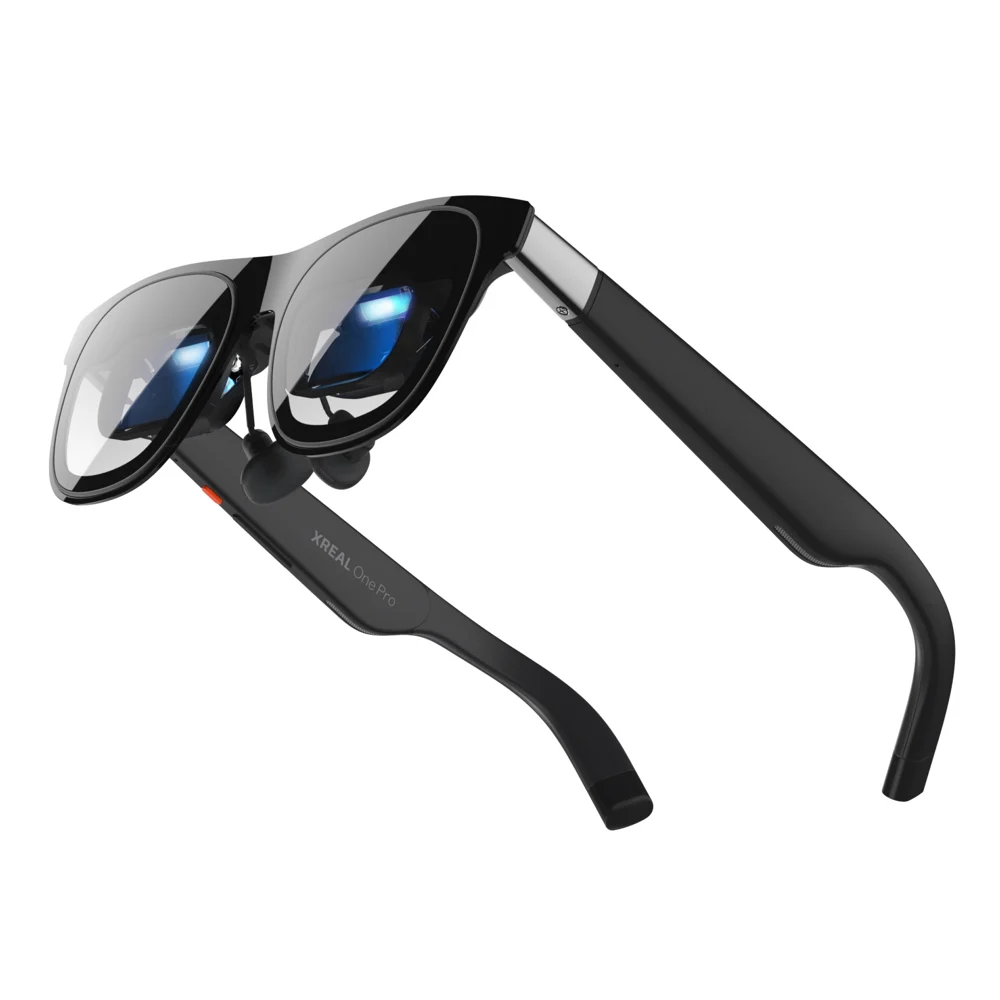
Discover five futuristic gadgets, from Hypershell X and Moonwalkers to AR glasses and a robot vacuum with an arm. Explore photos, official links and videos.

Discover 10 PS5 games to play in 2026, from Hades II to Resident Evil Requiem. Compare genres, find official buying links and check what matters in Italy.
Tell us what you’d like to discover next → · Share your housing needs →