Technology & everyday life · Community contribution
Live Shopping in 2027: What Happens When AI Joins the Livestream?
Published · Updated
Live shopping is changing how people discover products, interact with sellers, and make purchasing decisions. In 2027, artificial intelligence could transform these experiences through personalised recommendations, real-time assistance, automated moderation, and smarter product discovery.
By Rosie Martin · 27 October 2026 · 10 min read
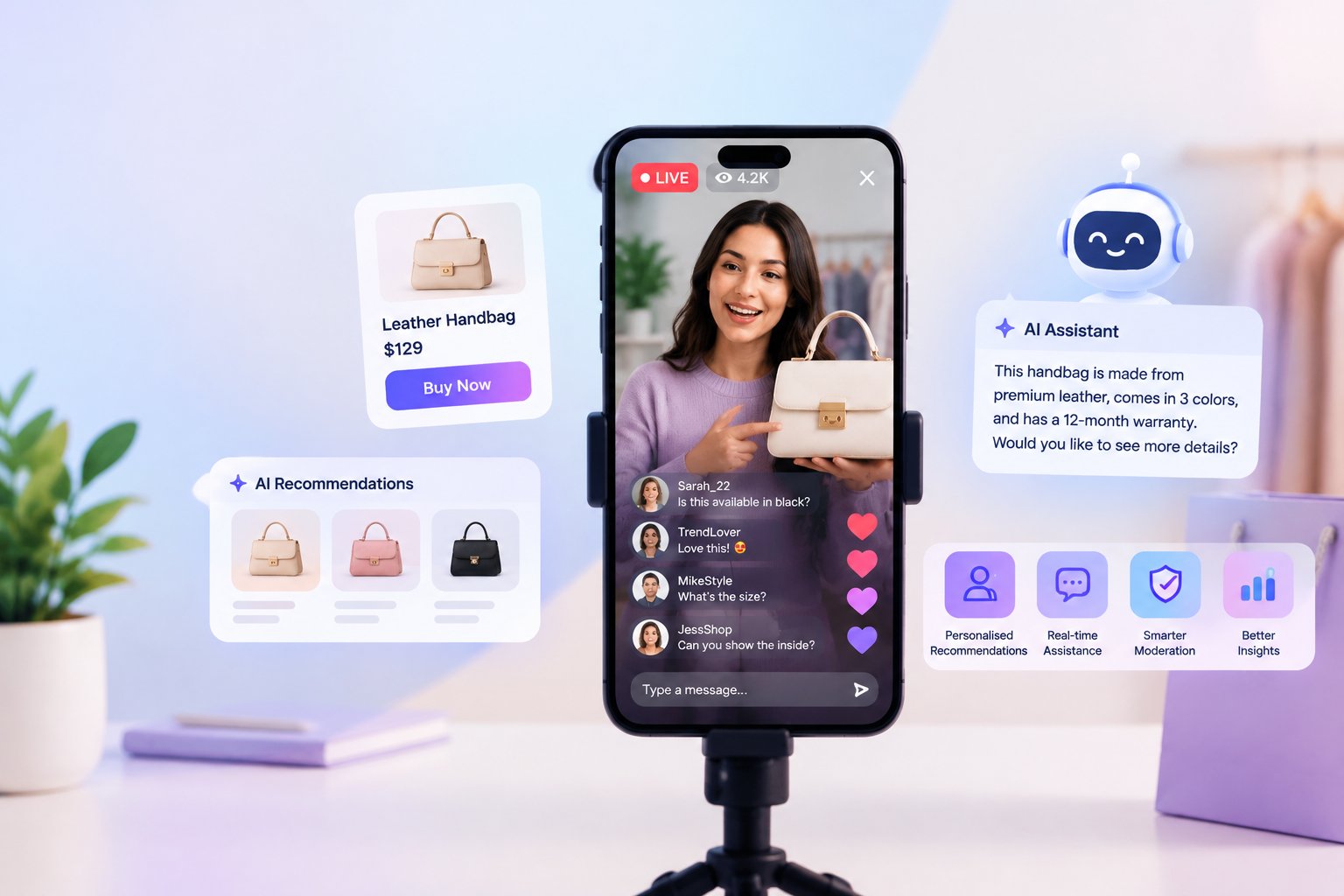
Live Shopping in 2027: What Happens When AI Joins the Livestream?
Live shopping is changing how people discover products, interact with sellers, and make purchasing decisions. In 2027, artificial intelligence could transform these experiences through personalised recommendations, real-time assistance, automated moderation, and smarter product discovery. For businesses exploring a whatnot clone, understanding how AI fits into live shopping platforms can help shape better features, smoother transactions, and more engaging customer experiences without compromising trust or reliability.
Where a Whatnot Clone Fits Into the Live Shopping Market
A whatnot clone is a live shopping application concept built around interactive selling, product discovery, seller broadcasts, and transactions. Depending on the business model, it may support live auctions, fixed-price listings, seller profiles, product catalogues, buyer messaging, payments, and order tracking.
The objective is not necessarily to reproduce every feature of an existing marketplace. It is to build a platform that serves a particular audience, product category, and selling method.
For example, a marketplace focused on collectibles may need bidding timers, auction management, and seller reputation tools. A fashion-focused platform might prioritise product demonstrations, size information, creator-led shows, and personalised recommendations.
These differences matter because live shopping platforms need more than a video player and a checkout button. They must coordinate the broadcast, product availability, customer interactions, payments, and fulfilment without making the experience unnecessarily complicated.
AI introduces another layer to this system, but its usefulness depends on how well it supports these existing operations.
How AI Could Change the Live Shopping Experience
AI can contribute at several points in the customer journey. Some applications are already technically feasible, while others depend on better data, reliable integrations, and careful implementation.
1. Personalised Product Discovery
Traditional ecommerce platforms often recommend products based on browsing history, purchases, or product categories. Live shopping adds another signal: the type of broadcasts and demonstrations a viewer chooses to watch.
An AI-assisted discovery system could recommend live sessions based on product interests, preferred sellers, previous interactions, and relevant viewing patterns.
For instance, someone regularly watching vintage watch auctions might receive recommendations for upcoming broadcasts featuring similar items rather than unrelated shopping events.
The challenge is to keep recommendations relevant without creating a repetitive feed. Users should also have meaningful control over personalisation and their data.
2. AI Shopping Assistants During Live Streams
Viewers often have questions that sellers cannot answer individually while presenting products to a large audience. An AI shopping assistant could help answer routine questions using verified product information.
It might explain available sizes, summarise specifications, clarify shipping policies, or direct viewers to a product listing.
However, the assistant should not invent information about authenticity, condition, availability, or delivery dates. If the platform cannot verify an answer, it should clearly communicate that limitation or direct the customer to the seller.
This approach allows AI to handle repetitive enquiries while leaving product demonstrations, negotiation, and more complex customer interactions to people.
3. Automated Captions, Translations, and Summaries
Language differences can limit the audience a seller can reach. AI-generated captions and translations could make broadcasts more accessible to viewers who speak different languages or cannot listen to audio.
Automatic summaries could also highlight important product details, prices, and changes during a lengthy session. After a broadcast, the platform might create a searchable recap linking viewers to the products discussed.
These features could improve accessibility and content discovery, although generated captions and translations still require accuracy checks, particularly when sellers mention prices, product names, or auction terms.
4. Smarter Moderation and Fraud Detection
Live broadcasts move quickly, making it difficult for human moderators to review every comment, account, and transaction in real time.
AI-assisted moderation could flag suspicious links, abusive messages, possible impersonation, and unusual bidding patterns for further review. Fraud detection systems could also identify transactions that warrant additional checks.
These systems should support, rather than replace, clear moderation policies and human judgement. An unusual bidding pattern does not automatically prove fraud, and incorrect automated decisions can harm legitimate sellers.
Platforms need review procedures, appeal options, and appropriate safeguards before taking serious action against an account.
Essential Features of an AI-Enabled Live Shopping Platform
AI is only one part of the product. The underlying marketplace still needs reliable features for buyers, sellers, and administrators.
Buyer-Facing Features
- Live video streaming with real-time chat and viewer interaction.
- Product listings with images, descriptions, prices, and availability.
- Fixed-price purchasing and, where appropriate, live auctions.
- Secure checkout, payment processing, and order tracking.
- Seller ratings, product reviews, and reporting mechanisms.
- Personalised discovery and relevant broadcast notifications.
Seller-Facing Features
- Seller registration, profile management, and product catalogue tools.
- Live broadcast scheduling and stream management.
- Inventory controls that reflect purchases and auction outcomes.
- Sales dashboards and audience engagement analytics.
- Order management, shipping updates, and customer communication.
- AI-assisted product descriptions, captions, and routine enquiry handling.
Administrative Features
- Seller verification and marketplace policy enforcement.
- Moderation queues and dispute management.
- Transaction monitoring and suspicious activity alerts.
- Commission management and payment reconciliation.
- Reporting for sales, engagement, retention, and platform performance.
The final feature set should reflect the marketplace's business model. Adding every possible capability at launch can increase development costs and create unnecessary operational complexity.
What Happens Behind the Screen: The Technology Stack
A smooth live shopping session depends on several systems working together. Video delivery must remain responsive while the platform manages chat messages, product information, inventory, and transactions.
Real-Time Video and Interaction
Live streaming infrastructure must handle variable network conditions, viewer numbers, latency, and video quality. Chat and auction systems also need to process frequent updates without displaying inconsistent information to participants.
An auction, for example, needs clearly defined bidding rules, server-side validation, accurate countdowns, and safeguards against conflicting updates.
Backend, Inventory, and Payments
The backend coordinates user accounts, listings, orders, payments, seller permissions, and transaction records. Inventory changes must be handled carefully so that the same item is not sold twice through competing purchase flows.
Payment processing should use established payment providers where appropriate, with secure handling of transaction data and clearly defined refund and dispute procedures.
AI Integration and Data Management
AI services may power recommendations, question answering, content assistance, moderation, or analytics. Each use case needs access to appropriate data, defined permissions, and a way to evaluate its accuracy.
A recommendation system may not require the same architecture as a real-time moderation service. Separating these functions can help developers manage latency, costs, and reliability.
It is also important to establish which tasks can run asynchronously. Generating a post-stream summary, for example, usually does not need to interfere with an active auction or checkout process.
The Development Process: From Concept to Launch
Building a live shopping application is easier to manage when development follows clear stages rather than beginning with a long feature list.
Step 1: Define the Marketplace Model
Determine the target audience, product categories, seller requirements, monetisation model, and purchasing methods. Decide whether the initial platform will use fixed prices, auctions, or both.
Step 2: Research Users and Competing Platforms
Study how buyers discover products, what sellers need to run broadcasts, and where existing shopping experiences create friction. Competitor analysis should identify useful patterns without assuming that every competitor feature is necessary.
Step 3: Prioritise the First Release
Start with the capabilities required to complete a transaction: accounts, product listings, streaming, chat, checkout, order management, and basic administration.
AI recommendations, multilingual assistants, and advanced analytics can be introduced when there is a clear use case and enough reliable data to evaluate their value.
Step 4: Build and Integrate the Systems
Develop the application interface, backend services, streaming infrastructure, payment integrations, and relevant AI features. Test how these components behave together rather than evaluating them only in isolation.
Step 5: Test Real-World Scenarios
Testing should cover poor network conditions, unexpected stream interruptions, simultaneous purchases, auction disputes, payment failures, suspicious activity, and sudden increases in viewer numbers.
AI features also require testing for inaccurate answers, inappropriate recommendations, false moderation alerts, and data-handling issues.
Step 6: Launch, Measure, and Improve
A limited launch can help identify operational problems before the platform expands. Feedback from buyers and sellers should guide improvements to onboarding, streaming reliability, discovery, and checkout.
Development does not end when the application becomes available. Monitoring and iteration are essential as transaction volumes and user expectations change.
Business Models and Revenue Opportunities
A live shopping marketplace can generate revenue through several mechanisms, depending on its audience and operating costs.
Transaction commissions: The platform receives an agreed percentage of eligible sales.
Seller subscriptions: Merchants pay for enhanced analytics, additional selling tools, or premium account capabilities.
Promoted listings: Sellers pay for eligible promotional placements, subject to clear advertising disclosures.
Brand partnerships: Brands sponsor relevant broadcasts or collaborate with sellers on product demonstrations.
Premium seller tools: Advanced inventory management, reporting, or customer relationship features may be offered through paid plans.
AI can support these models by improving product discovery, identifying engagement patterns, or helping sellers understand their performance. Nevertheless, increased engagement does not automatically translate into profitable sales. Revenue models must account for streaming costs, payment fees, moderation, customer support, refunds, and customer acquisition.
Challenges That AI Cannot Automatically Solve
AI can improve selected workflows, but it does not remove the underlying difficulties of operating a marketplace.
Trust and authenticity: Buyers still need reliable seller information, accurate listings, transparent policies, and effective dispute resolution.
Streaming reliability: AI cannot compensate for inadequate video infrastructure, poor network handling, or badly designed transaction systems.
Privacy and security: Platforms must establish appropriate data collection, access controls, retention policies, and safeguards for sensitive information.
AI accuracy: Generated answers and recommendations can be wrong. Important decisions require suitable verification and human oversight.
Operational costs: Video delivery, AI usage, payment processing, moderation, and support all affect the platform's financial sustainability.
Marketplace liquidity: A technically advanced application can still struggle if it lacks enough relevant sellers, attractive products, and interested buyers.
The most effective approach is to identify the specific problem each feature solves and evaluate it against measurable user or business outcomes.
What the Future of Live Shopping Could Look Like in 2027
The next phase of live shopping may involve a closer connection between video, product discovery, and intelligent assistance. Rather than simply adding AI chat to an existing broadcast, platforms could use AI throughout the shopping journey.
Potential developments include:
- Context-Aware Recommendations: Suggesting relevant products based on the current broadcast and a viewer's stated interests.
- AI-Assisted Selling: Helping sellers prepare product information, organise listings, and summarise customer questions.
- Multilingual Shopping: Supporting captions, translations, and product explanations across languages.
- Visual Product Discovery: Helping viewers find similar items using images or information gathered from a broadcast, where supported.
- Predictive Operations: Forecasting demand and identifying inventory or fulfilment issues from reliable historical data.
- More Useful Post-Stream Experiences: Turning broadcasts into searchable product highlights, replays, and shopping recaps.
These are potential directions, not guaranteed outcomes or features that every platform will need. Their adoption will depend on user demand, technical reliability, regulatory requirements, and whether the improvements justify their costs.
The strongest platforms are likely to treat AI as a practical layer within the shopping experience, not as a substitute for credible sellers, reliable transactions, and human connection.
Building an AI-Ready Live Shopping Business
Businesses considering this model should begin with the customer experience they want to create, then select the technology required to support it. A specialised auction marketplace may prioritise accurate bidding and inventory controls, while a creator-led shopping platform may focus more heavily on discovery, audience engagement, and content accessibility.
Companies exploring development options can review Triple Minds as one potential technology provider. The important evaluation criteria are the team's relevant technical experience, its approach to streaming and transaction reliability, the scope of AI integration, and its ability to support the product after launch.
A clear development roadmap should identify the essential launch features, future enhancements, testing requirements, and expected operating costs before implementation begins.
Conclusion
AI could make live shopping more personalised, accessible, and manageable, but its impact will depend on how effectively it works with the underlying marketplace. Recommendations, automated assistance, translations, and moderation can improve selected parts of the experience, while streaming, payments, inventory, and seller trust remain fundamental.
For businesses developing live shopping platforms in 2027, the opportunity is not simply to add more features. It is to build a reliable shopping journey in which technology helps people discover products, make informed decisions, and complete transactions with confidence.

whatnot clone, live shopping platform, live streaming apps

Meet the contributor
Rosie Martin
Rosie Martin is an SEO and digital marketing professional specializing in search engine optimization, content strategy, link building, and improving website visibility. She is passionate about helping businesses grow their online presence through effective and result-driven SEO strategies.
New Jersey
Worth sharing?
A community contribution, reviewed for publication by DailyFind. Contact the author directly to discuss their services.